Spain's Prime Minister Holds Traffickers Responsible for Migrant Surge in Ceuta
Spain's PM attributes massive migrant influx to traffickers after 60,000 reach Ceuta. Italy suspends Schengen agreement with Madrid amid crisis.
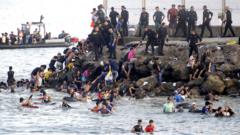
PM Blames Organized Trafficking Networks for Migrant Crisis
Spain's Prime Minister has directed accusations toward human trafficking organizations following an unprecedented surge in migrant arrivals at Ceuta, the Spanish autonomous city located on the African coast. The dramatic influx, which saw approximately 60,000 individuals cross into Ceuta from Morocco within a short timeframe, has become a focal point in discussions about European border security and the role of organized networks facilitating unauthorized migration.
According to official statements from Madrid, the vast majority of these migrants who reached Ceuta had returned to Moroccan territory by Friday evening, suggesting temporary rather than permanent settlement patterns. This development marked a significant shift in the immediate aftermath of what had been characterized as a mass crossing event.
Italy Takes Unilateral Action on Border Controls
The situation escalated further when Italy announced the suspension of its Schengen agreement provisions regarding free movement with Spain. This extraordinary measure underscores the tension within Europe's open-border framework and reflects growing concerns among member states about uncontrolled migration flows. The suspension represents a rare invocation of emergency protocols designed to protect national interests when normal border management procedures prove inadequate.
International Response and Border Management Challenges
The migrant crisis at Ceuta has brought international attention to the complex dynamics between Spain and Morocco, particularly regarding maritime patrol operations and enforcement of existing agreements. The Spanish authorities emphasized that the responsible parties for organizing and facilitating these dangerous crossings remain the trafficking networks that profit from desperate individuals seeking entry into Europe.
Officials noted that the coordination required to manage such an enormous influx of people within such a concentrated timeframe presented unprecedented logistical challenges. The fact that most individuals returned to Morocco within hours suggested either voluntary return arrangements or coordinated efforts by Moroccan authorities to manage the situation from their side of the border.
European Union Border Framework Under Pressure
This incident has exposed vulnerabilities in Europe's integrated border management system. The Schengen Agreement, which facilitates seamless travel among participating nations, faced its credibility challenged by Italy's decision to suspend related provisions with Spain. Such actions, while technically permitted under emergency circumstances, represent a breakdown in the mutual trust that underpins the entire framework of European free movement.
Spain's government has called for enhanced cooperation from neighboring nations and increased international coordination to combat trafficking networks at their source. The emphasis on traffickers as the primary culprits reflects the official narrative that the crisis stems from criminal organizations exploiting vulnerable populations rather than from migration policy failures.
Focus on Criminal Networks and Prevention
The Spanish Prime Minister's statements have consistently directed blame toward the sophisticated logistics of human trafficking operations. These networks organize transportation, coordinate timing with other movements, and profit substantially from each individual successfully guided across international boundaries. By highlighting this dimension, Spanish authorities attempt to separate the migration phenomenon from questions about their own border security capacity.
The incident raises questions about whether current enforcement mechanisms adequately address the scale of organized trafficking operations. European nations continue to grapple with the challenge of distinguishing between independent migration decisions and movements orchestrated by criminal enterprises.


