Hamas Disarmament Plan: Promising Path Despite Significant Obstacles in Gaza
Explore the complex Hamas disarmament initiative for Gaza. Discover how this rare opportunity balances political challenges, trust deficits, and humanitarian co...
Understanding the Hamas Disarmament Initiative
A comprehensive Hamas disarmament plan represents a pivotal moment in Middle Eastern geopolitics, offering a sliver of optimism amid decades of intractable conflict. The proposal to demilitarize militant organizations operating in Gaza emerges as one of the most ambitious peace-building efforts in recent history, though significant hurdles threaten to derail negotiations before meaningful progress can be achieved. The Hamas disarmament framework addresses fundamental security concerns while attempting to establish pathways toward sustainable regional stability.
The complexity surrounding any Hamas disarmament plan cannot be overstated. Political actors across multiple nations maintain competing interests, security establishments resist compromise, and populations scarred by violence demand accountability. These interconnected factors create an environment where trust remains elusive and skepticism pervades diplomatic channels. Yet despite these formidable obstacles, the mere existence of serious disarmament discussions signals a potential departure from perpetual cycles of violence.
Political Realities Complicating Agreement
The political landscape surrounding Gaza peace initiatives presents extraordinarily complex terrain. National governments, international mediators, and local factions each bring distinct priorities to negotiations. Some stakeholders prioritize security guarantees, others emphasize humanitarian reconstruction, while additional parties insist upon accountability mechanisms for documented violations. Reconciling these divergent positions within a unified agreement structure demands unprecedented diplomatic sophistication and political will from all involved parties.
International involvement introduces additional layers of complexity to the Hamas disarmament conversation. Various world powers maintain strategic interests in regional outcomes, and their positions often conflict with stated humanitarian objectives. Balancing geopolitical considerations with genuine peace-building aspirations remains one of diplomacy's most persistent challenges in this context.
Legacy of War and Destruction
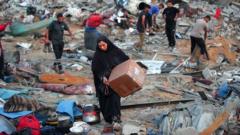
The human and physical toll extracted by decades of conflict provides essential context for understanding current disarmament negotiations. Thousands of deaths, widespread destruction of critical infrastructure, and profound psychological trauma affect civilian populations throughout Gaza. These realities cannot be abstracted away or minimized in diplomatic processes; rather, they must inform every aspect of agreement development and implementation strategies.
Reconstructing Gaza after prolonged conflict requires resources, international coordination, and a sustained commitment to rehabilitation that extends far beyond immediate ceasefire arrangements. The Hamas disarmament plan necessarily incorporates provisions addressing reconstruction priorities, humanitarian assistance expansion, and mechanisms for preventing future escalations. Without addressing these foundational concerns, any agreement remains fragile and vulnerable to collapse.
Trust Deficit as Central Challenge
Zero trust environments characterize current relations between primary negotiating parties. Historical patterns of broken agreements, clandestine weapons development, and surprise military actions have created institutional skepticism that permeates all discussions. Building sufficient confidence to facilitate genuine disarmament requires verification mechanisms, transparent monitoring systems, and international oversight structures that can withstand partisan scrutiny.
The Hamas disarmament initiative must overcome decades of mutual suspicion through concrete verification protocols. International observers, technical monitoring systems, and phased implementation schedules all contribute to addressing trust deficits. However, implementing these mechanisms demands resources, political consensus, and unwavering commitment from parties that have previously prioritized military advantage over transparency.
Pathways Forward and Rare Opportunities
Despite formidable obstacles, the Hamas disarmament plan represents a genuine opportunity for transformative change. Regional and international actors acknowledge that perpetual conflict serves no stakeholder's long-term interests. Military solutions have failed to achieve stated security objectives, humanitarian costs continue accumulating, and economic development remains impossible amid ongoing violence.
The current moment offers rare convergence of factors that might facilitate agreement. War fatigue affects civilian populations across the region, international pressure mounts for resolution, and emerging recognition spreads that traditional military approaches require supplementation or replacement with political solutions. These circumstances create windows of opportunity that close quickly if negotiations falter or trust collapses further.
Implementation Considerations
Successfully executing any Hamas disarmament agreement requires careful attention to sequencing, verification, and incentive structures. Phased approaches allowing gradual confidence-building offer advantages over immediate total disarmament demands. International guarantees regarding security and economic development could incentivize compliance and reduce incentives for cheating or hidden weapons retention.
The Hamas disarmament plan must incorporate provisions ensuring participant security throughout implementation phases. Organizations surrendering military capabilities require assurances that disarmament choices will not render them vulnerable to attack or political marginalization. Addressing these legitimate security concerns while maintaining disarmament momentum represents one of diplomacy's most delicate balancing acts.
Conclusion: Hope Amid Complexity
The Hamas disarmament plan exemplifies how even seemingly intractable conflicts contain potential resolution pathways. The combination of war's destructive realities, political will among key stakeholders, and international support creates unprecedented opportunities for change. While substantial obstacles remain, dismissing these efforts as futile ignores the genuine progress possible when diplomatic alternatives receive serious consideration and resource commitment.


