Farage Draws Parallel Between His Inquiry and Trump's Legal Battles
Reform UK leader Nigel Farage compares his financial scrutiny to Donald Trump's investigations, dismissing criticism over undeclared gifts as 'complainants' soc...
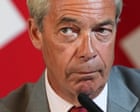
Farage Compares Standards Inquiry to Trump's Legal Challenges
The Farage financial inquiry has intensified as Reform UK's leader draws striking parallels between his current situation and the ongoing legal battles faced by former U.S. President Donald Trump. During recent comments, Farage characterized both himself and Trump as "outsiders" confronting powerful institutional forces, while dismissing the criticism directed at his financial disclosures.
In his statement, Farage adopted a defiant tone, suggesting that the scrutiny he faces represents a broader cultural phenomenon he termed a "complainants' society." This characterization comes amid mounting pressure regarding his failure to properly register substantial financial contributions received ahead of the recent election cycle.
The Undeclared Gifts at the Center of the Controversy
The Farage financial inquiry centers on multiple unreported financial transactions that have raised significant concerns among regulators and political observers. Most notably, the Reform UK leader failed to declare a substantial £5 million gift originating from Christopher Harborne, a Thailand-based donor with connections to the party's fundraising efforts.
Beyond the Harborne contribution, additional financial support came from George Cottrell, described as a personal acquaintance of Farage with a prior conviction for fraud. These undeclared transfers occurred prior to the most recent election, a critical period when transparent financial reporting becomes increasingly important for maintaining public confidence in the political process.
The cumulative nature of these omissions has prompted formal inquiries into Farage's compliance with financial disclosure requirements, elevating the stakes considerably for the Reform UK leader and his organization.
Farage's Defense Strategy and Institutional Critique
Rather than offering detailed explanations for the financial oversights, Farage has adopted a broader argumentative approach. He frames his predicament as emblematic of systemic efforts to marginalize political "outsiders" who challenge establishment orthodoxy. This rhetorical strategy mirrors talking points frequently employed in populist political movements across various democracies.
Farage openly acknowledged experiencing frustration and irritability throughout the summer months, attributing his emotional state to what he perceives as unfair targeting by authorities and media institutions. His comparison to Trump's experience serves a dual purpose: it positions him within a global movement of anti-establishment figures while simultaneously suggesting that his treatment constitutes politically motivated persecution.
The Broader Context of Reform UK's Financial Practices
The Farage financial inquiry cannot be divorced from Reform UK's overall approach to campaign financing and donor relations. As a relatively newer political entity, the party has attracted substantial contributions from wealthy individuals attracted to its anti-establishment messaging and policy positions.
The involvement of Harborne, whose international business interests and philanthropic activities have occasionally drawn scrutiny, raises questions about the vetting procedures implemented by Reform UK's financial management team. Similarly, Cottrell's criminal background should have triggered enhanced due diligence protocols before accepting contributions linked to his name or interests.
Standards Inquiry Implications and Regulatory Response
The standards investigation triggered by these disclosures involves multiple regulatory bodies and parliamentary committees charged with overseeing political finance compliance. These institutions must weigh the seriousness of the violations against other considerations including intent, materiality of the omissions, and the overall pattern of financial reporting by the party.
Farage's defensive posture and institutional criticism may complicate his standing with regulatory authorities tasked with investigating these matters. Regulatory bodies typically appreciate forthright acknowledgment of violations and demonstration of corrective measures, rather than deflection through broader political argumentation.
Comparison to Trump's Legal Challenges: Credible or Rhetorical?
The parallel Farage draws between his Farage financial inquiry and Trump's extensive legal difficulties requires careful examination. Trump has faced multiple criminal indictments, civil lawsuits, and investigations spanning years across numerous jurisdictions, involving allegations ranging from classified document handling to election interference and financial impropriety.
By contrast, Farage's situation involves regulatory scrutiny of campaign finance disclosures, a serious matter but operating within a different category of legal jeopardy. The comparison, while politically potent among Reform UK supporters and sympathetic audiences, may overstate the equivalency between the two situations and could be perceived as trivializing Trump's more extensive legal exposure.
Looking Forward: Consequences and Potential Outcomes
As the Farage financial inquiry progresses through formal channels, multiple outcomes remain possible. Investigators may conclude that oversights occurred but lacked sufficient intent or materiality to warrant serious sanctions. Alternatively, they might determine that systematic violations warrant substantial penalties, public censure, or refer matters for potential criminal investigation.
The political ramifications extend beyond regulatory determinations. Farage's credibility with Reform UK members and supporters may depend partly on how he navigates the inquiry's outcome, while his broader influence within British politics could shift significantly depending on investigation conclusions and public perception of his responses throughout the process.